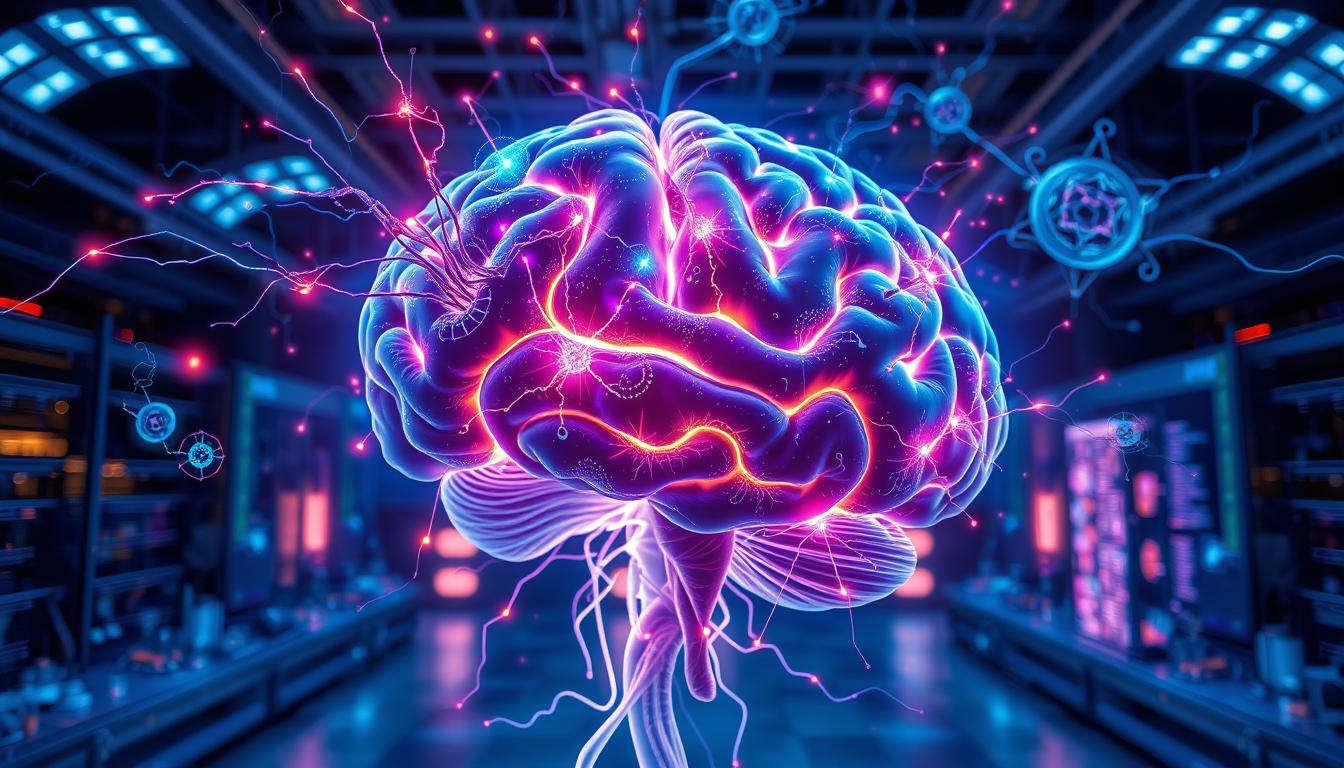
Neuroscience has made exciting discoveries that could change medicine. Our growing understanding of the brain is leading to new treatments. These changes promise to improve how we handle many medical issues.
Scientists have found out how the brain can change and adapt. They are also learning about neurotransmitters and how they work together. This knowledge is helping to find better treatments for many conditions.
Exploring the brain is opening up new areas in medicine. We’re seeing the start of personalized treatments and brain-computer interfaces. These advances are reshaping healthcare. Let’s look at these discoveries and how they might change medical care.
The Basics of Neuroscience
Neuroscience is the study of the nervous system. It gives us a peek into how the brain works. At its core are neural networks, complex webs of neurons that handle information and help us think.
Thanks to Neuroimaging, we can see the brain’s activity. This helps us understand how it reacts to things and controls our actions.
Computational neuroscience uses math and computer science to study the brain. It creates models that mimic the brain’s neural networks. These models help us understand how we see, learn, and remember things.
By using the latest in Computational Neuroscience, scientists are making big discoveries. They’re uncovering the brain’s secrets, leading to new medical breakthroughs.

As we learn more about the brain, neuroscience’s possibilities grow. It helps us understand and treat brain diseases. This field is key to unlocking the human mind’s full potential.
By diving into neuroscience, we appreciate the brain’s complexity and flexibility. It shows us how the brain shapes our lives.
Recent Breakthroughs in Brain Research
Neuroscience has seen a big leap in recent years. We now understand the human brain much better. Researchers have mapped neural pathways, studied brain activity in real-time, and found how memory and learning work.
Neuroplasticity, the brain’s ability to change and adapt, is a key area of research. Scientists are using this to help people recover from brain injuries or strokes. They’re finding new ways to improve brain function.

New technologies in neuroimaging and computational neuroscience have opened up new insights. These tools help scientists see how different brain parts connect. This knowledge is crucial for understanding many cognitive and behavioral processes.
The mix of Cognitive Science and Neurotechnology is speeding up research. By using the latest tools and theories, scientists are making big strides. They’re working on new ways to improve education, mental health, and technology for people with disabilities.
The Role of Neuroplasticity in Healing
Neuroscience has made big strides in understanding how the brain changes and adapts, known as neuroplasticity. This idea is key for healing from brain injuries and neurological disorders. It helps researchers and doctors create new ways to help people recover.
Neuroplasticity means the brain can change and fix itself. It can learn new things and adapt to new situations. This is especially important for people with brain injuries or neurological conditions.

Healthcare experts use what they know about neuroplasticity to create special treatments. These treatments help people with strokes or Parkinson’s disease. As neuroscience keeps growing, the chances for better healing and outcomes are getting better.
Advancements in Understanding Neurotransmitters
In Neuroscience, studying neurotransmitters is key. These messengers are vital for brain function and neural networks. They impact Cognitive Science. Recent findings have revealed how these messengers work, leading to new medical treatments.
Scientists have explored how neurotransmitters like serotonin, dopamine, and GABA are released and regulated. This knowledge helps in creating new therapies for mental and neurological issues. These breakthroughs could change how we treat many health problems.
Neuroscience, Neural Networks, and Cognitive Science together have deepened our understanding of the brain. This teamwork has opened doors to new treatments and brain-computer interfaces. The future looks bright for those facing neurological and mental health challenges.
Brain-Computer Interfaces: The Future is Now
The field of Neuroengineering is growing fast, bringing us closer to the future of Neurotechnology. Brain-computer interfaces (BCIs) are leading this charge. These devices are changing how we use technology, making it more personal.
BCIs connect our brains directly to devices. This lets us control prosthetics, help those with paralysis talk again, and boost our thinking skills. Scientists are always finding new ways to use this tech.

BCIs can help the blind see and control robots more naturally. As this field grows, we’ll see even more amazing changes. The future of Neuroengineering and Neurotechnology is full of promise.
The Gut-Brain Connection Explained
In the world of Neuroscience, a new discovery has been made. It shows a strong link between the gut and the brain. This connection, known as the gut-brain axis, is changing how we see the relationship between our gut and brain.
Recent studies have found that the gut microbiome is key to our brain’s function and behavior. The tiny microbes in our gut talk to our brain through different ways. They use the vagus nerve, immune system, and make neurotransmitters to communicate.
This knowledge of the gut-brain link is leading to new treatments for brain and mental health issues. By changing what we eat, using probiotics, or special therapies, researchers are finding new ways to help. They’re looking into treating depression, anxiety, Parkinson’s, and Alzheimer’s.
As Neuroscience digs deeper into the gut-brain axis, we’re on the verge of big breakthroughs. This research could change how we treat mental and neurological health. It’s an exciting time for Neural Networks research.
Neuroscience and Its Impact on Aging
As we age, our brains change in amazing ways. Cognitive Science has helped us understand these changes. Tools like fMRI and PET scans let scientists see how the brain works in older people. They’ve found out how aging affects our thinking.
Neuroscience has shown us the brain’s amazing ability to change. Even in older adults, the brain can make new connections. This is good news for keeping our minds sharp and preventing diseases like Alzheimer’s.
Scientists are looking into ways to help the brain stay healthy as we age. They’re studying things like brain training, exercise, and diet. This research could lead to better ways to keep our minds sharp as we get older.
As more people live longer, this research will be even more important. It will help us improve care for the elderly. By learning more about the brain, we can help people stay mentally healthy and understand aging better.
Ethical Considerations in Neuroscience Research
Neuroscience is making huge strides, but we must think about the ethics. Neurotechnology, like brain-computer interfaces, brings up big questions. These include privacy, consent, and misuse.
It’s key to keep personal info safe and make sure people know what they’re getting into. Neuroengineering could boost our brains, but we must use this power wisely. We don’t want it to make things worse or take away our freedom.
Setting rules and watching over Neurotechnology is vital. Researchers and lawmakers need to work together. They should create rules that protect privacy, ensure consent, and share benefits fairly.
By being ethical, Neuroscience can explore new frontiers. But it must do so while respecting the rights and safety of everyone involved.
The Future of Neuroscience in Medicine
Neuroscience is growing fast, bringing new ways to treat medical issues. Scientists are combining Neuroscience, Neuroengineering, and Neurolinguistics. This mix could lead to personalized brain treatments for many health problems.
One exciting area is “personalized brain medicine.” It uses advanced imaging and AI to make treatments just for each person. This way, doctors can find the best treatments for each brain disorder.
Neuroscience and AI are also teaming up. AI helps analyze huge amounts of brain data quickly. This could lead to early disease detection and better neuroprosthetics and brain-computer interfaces.