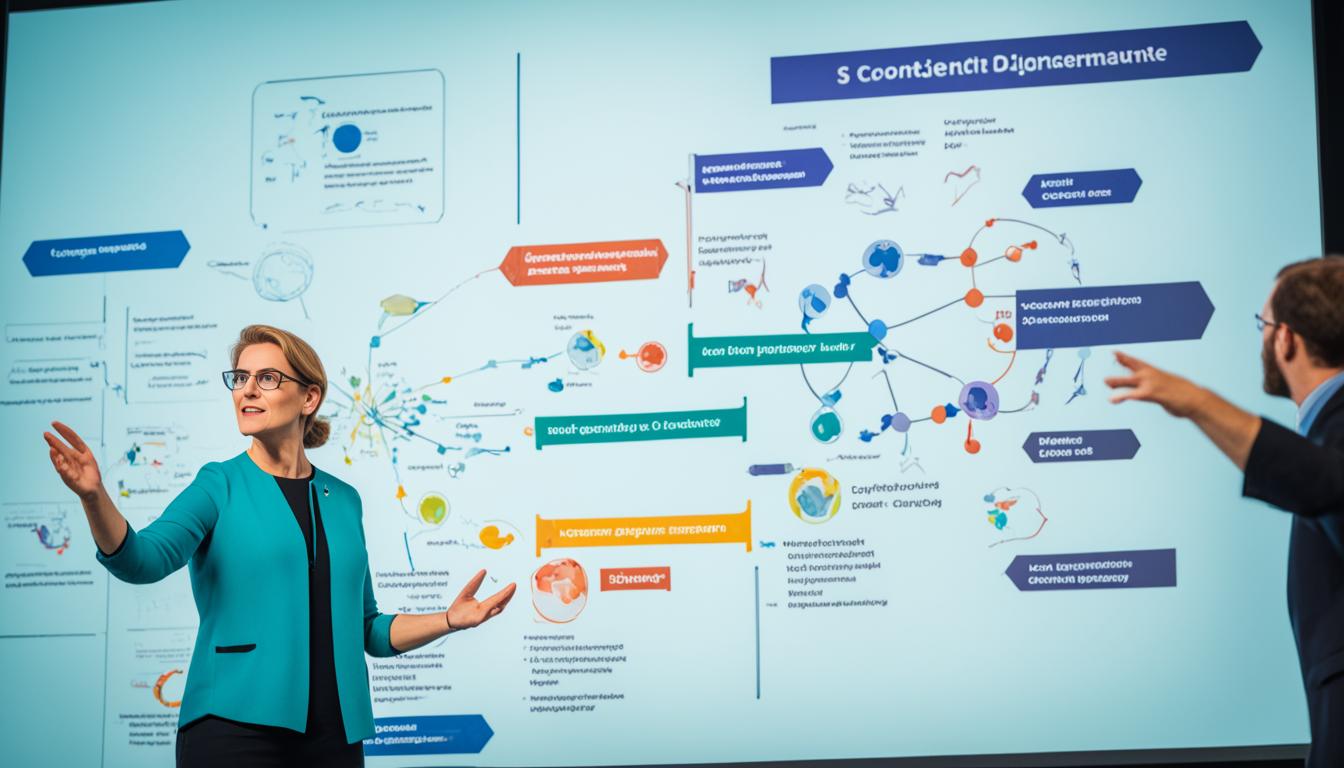
Science communication is key in our modern world. It connects scientific research with the public. It’s crucial for boosting scientific knowledge, helping people make choices based on facts, and ensuring they can make informed decisions.
By making science easy to understand, communicators spark curiosity and critical thinking. They help people appreciate the scientific process more. This makes science more engaging and valuable.
With science and technology moving fast, the need for good science communication is urgent. It helps people understand the world better, make smart choices, and get involved in science. This leads to more trust in science and a more informed public.
Bridging the Gap between Science and Society
Effective science communication is key to connecting scientists with the public. By making complex science easy to understand, we can help people get what science is all about. This makes it easier for folks to make smart choices and trust scientific discoveries more.
Making Complex Concepts Accessible
One big challenge in sharing science is explaining hard ideas simply. Communicators use stories, pictures, and simple words to make science easier. This way, everyone can get the main points without getting lost in complicated words or details.
Building Public Trust in Scientific Findings
It’s important for people to trust science. This trust helps guide decisions and shape policies. Communicators are key in building this trust by being open about what we don’t know and the limits of science. They encourage critical thinking and open talks, helping people understand and trust scientific research more.
The Role of Science Communication in Education
Science communication is key to sparking interest in STEM fields among young people. It makes science exciting and easy to understand. This encourages students to follow careers that help us learn more and solve big problems.
Inspiring Young Minds to Explore STEM Fields
Teachers and outreach experts use new ways to make science exciting for students. They show how STEM subjects apply to everyday life through experiments and stories. This approach builds a love for STEM and important skills like critical thinking and problem-solving.
The need for STEM experts is growing, making science communication in schools more important. It connects complex science with students’ curiosity. This helps the next generation face big challenges, advance technology, and make a better future.
This link between science communication and education prepares students to be informed and active citizens. They’ll be ready to solve global problems.
Communicating Science Effectively through Various Channels
Effective science communication uses many channels to reach different people. It includes traditional media like news articles, TV shows, and radio, as well as digital tools like social media, blogs, and podcasts. By using stories with text, images, videos, and interactive parts, scientists make hard science easy to get.
Traditional media like newspapers and TV still help share science with the public. They let experts go deep into their research. Digital media, like social media and online sites, offer a lively way for scientists to talk directly with people.

By choosing the right science communication channels, experts can tell stories that grab attention and help people understand new science. By mixing multimedia storytelling with both old and new media, they make sure lots of people learn about science. This helps connect science with society.
The Impact of Science Communication on Policy and Decision-Making
Science communication is key to shaping public policy and decision-making. It gives policymakers the facts they need to make informed choices. This is vital in areas like health, the environment, and new technologies, where science can change people’s lives.
Providing Evidence-Based Information to Policymakers
Science communicators turn complex science into simple, useful information for policymakers. They connect scientists with those who make policy. This helps policymakers make choices based on solid evidence, leading to better solutions for society.
Today, we’re dealing with more complex global problems than ever. Science communication is more important than ever. It gives policymakers the latest info on issues like climate change, health, and new tech. This helps them make decisions that really help people.
Addressing Misinformation and Pseudoscience
In today’s digital world, misinformation spreads fast. As science communicators, we must fight back by debunking pseudoscience. We need to teach the public to think critically. This way, they can spot false information from true.
Promoting Scientific Literacy and Critical Thinking
It’s vital to boost scientific literacy and critical thinking. We should give people the skills to check sources, analyze data, and grasp the scientific method. Making science easy to understand can spark a love for its thoroughness and honesty.
With educational programs and interactive tools, we can get people to question and seek truth. By clearing up myths with facts, we help them make better choices. This builds a society that values science.
Science Communication in the Digital Age
The digital age has changed how we talk about science. Now, science communicators use social media and online platforms to reach more people. They share new research, clear up myths, and talk with the public in new ways on Twitter, Instagram, and YouTube.
Using the internet to share science has its ups and downs. It lets information spread fast and lets people talk directly with the public. This can make science easier to understand and build trust in scientific discoveries. But, it also means dealing with issues like false information spreading quickly.
Leveraging Social Media and Online Platforms
Social media is a big help for sharing science. On Twitter and Instagram, science communicators can connect with many people and start conversations. YouTube is great for showing science in a fun, visual way.
But, there are risks in sharing science online. It’s important to make sure the info is true and stop wrong information from spreading. By being careful, science communicators can share science with the public in a trustworthy way.

Storytelling and Visualization: Engaging Strategies for Science Communication
Storytelling and data visualization are changing the way we share science. They make complex ideas easier to understand and remember. By using stories, science communicators connect with people on a deeper level.
Storytelling in science is more than just sharing facts. It’s about creating stories that make science come alive. These stories make research more relatable and accessible to everyone. They inspire wonder, build empathy, and help us understand science better.
Data visualization adds to the power of storytelling. It turns complex data into easy-to-understand visuals like infographics and animations. These visuals grab attention and make science clearer. They help people get the big picture and spark interest in science.
Storytelling and data visualization work together to make science communication exciting. They help bridge the gap between science and the public. This approach inspires people to explore the wonders of science.
Ethical Considerations in Science Communication
We have a big responsibility as science communicators. We must follow ethics and integrity. Our job is to share information in a way that builds trust and helps everyone. We need to balance being open, honest about what we don’t know, and keeping high standards.
One important thing to avoid is spreading wrong information and changing scientific facts. We must always share accurate, fair information. We should also stop false stories that hurt people’s trust in science. It’s key to talk about what we’re not sure about and how science is always changing.
How we talk about science can affect the scientific community too. As science supporters, we need to think about how our words can change funding, policy, and how people see science. Being careful with our words means understanding the complex science world well.
Good science communication is more than just sharing facts. It’s about connecting science with society, getting people involved, and making sure science helps people. By following these ethical guidelines, we can help create a future where science and society work together. This future is based on truth, honesty, and seeking knowledge.
Celebrating Science: Communicating Breakthroughs and Discoveries
Science communication is more than just sharing facts. It’s about sparking the public’s imagination and building a love for science’s big wins. By sharing amazing breakthroughs and discoveries, we connect science with society in a meaningful way.
Sharing the thrill of scientific discovery is key. When we tell the stories of scientists’ hard work and their big moments, we grab people’s attention. This makes them curious and eager to learn more. By explaining how science works, we make it easier for everyone to get involved and support it.
Sharing scientific breakthroughs changes how people see science. When folks see how science can change the world, they start to value it more. This leads to more support for science, which is key for progress in many areas.
Science communicators are crucial in linking scientists with the public. By sharing the stories behind scientific achievements, they inspire a deeper love for science. This creates a sense of wonder and excitement, driving the next wave of scientists and innovators.
The Future of Science Communication
Science is always changing, and so is how we talk about it. Science communicators will have to get used to new tech like virtual and augmented reality. They’ll also need to keep up with social media and digital platforms. And, they might even use artificial intelligence to help share science.
Science communication will face big challenges like climate change, pandemics, and new tech. It’s important to use new tools and ways to keep science talks relevant and effective. This will help science meet the changing needs of society.
Technology will be key in the future of sharing science. New tech like virtual and augmented reality will let people dive into science in a fun way. Social media and digital platforms will keep helping us reach more people and talk about science.