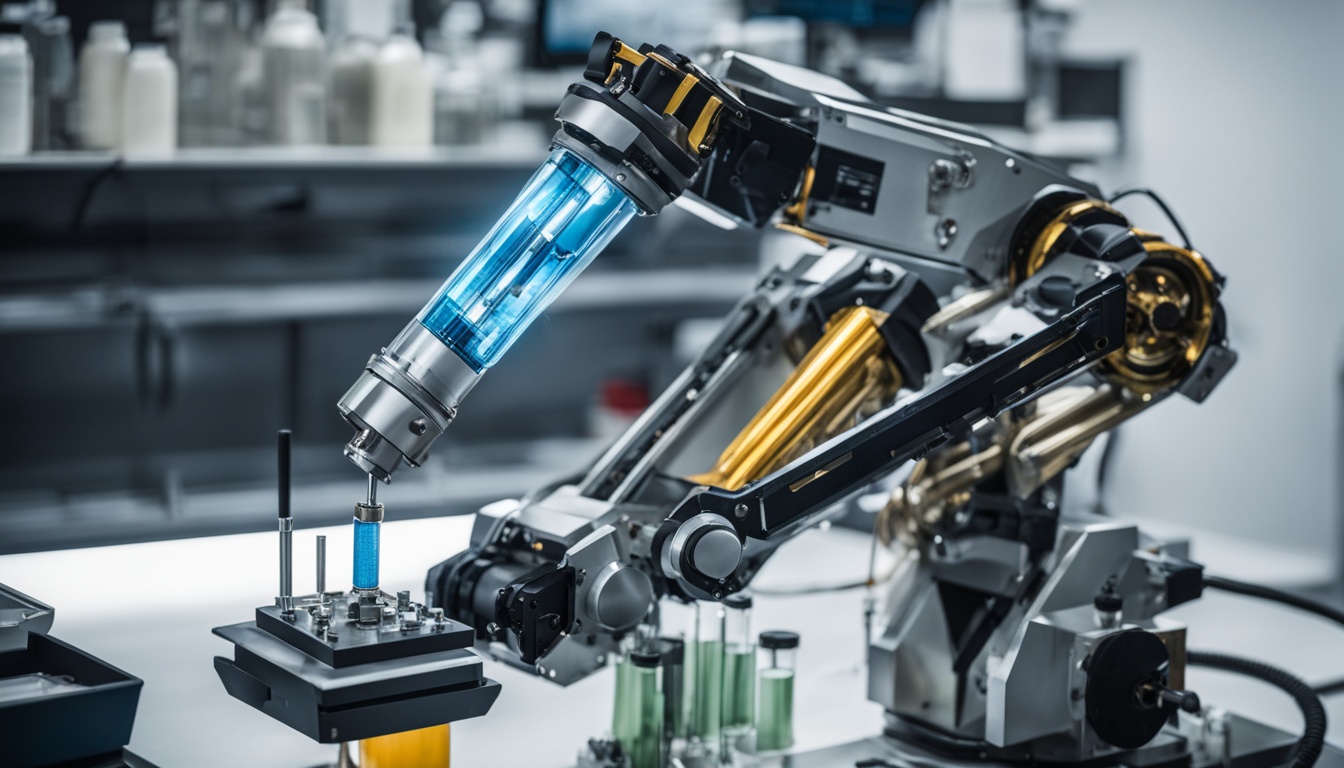
Robotics has changed the way we do science, making big changes in research and exploration. It lets us go where we can’t and improves how we do things with precision. This makes robotics key in science, changing how we learn about the world.
Robotics: Revolutionizing Scientific Exploration
Robotics has changed the way we explore the world. These machines let scientists go where it’s too risky or hard for humans. They’ve gone deep into the ocean and even to space, bringing back important data and discoveries.
Venturing into Uncharted Territories
Robots have opened up new areas for scientists to study. They’ve sent probes and underwater vehicles into the unknown. These robots have shown us the secrets of the deep sea. In space, they help us learn about other planets with their precision.
Enhancing Precision and Accuracy
Robots are known for their precise work in science. They collect data with great detail, making sure research is reliable. This has made science better, helping researchers make smarter choices and find solid answers.
Pushing the Boundaries of Scientific Discovery
Robotics has become a key driver of scientific discovery, pushing past old limits. It helps us understand the universe and life’s secrets. Robots have greatly helped us learn more about our world.
Robotic probes and rovers go to the farthest reaches of space. They bring back data and images that change how we see the cosmos. Under the sea, underwater robots explore deep waters. They find new life and show us how marine life interacts.
In life sciences, robots help researchers do experiments with great precision. They’ve changed how we study the human body and nature. This has led to big advances in fields like genetics and medical imaging.
Robotics has made scientific research faster and opened new ways to explore. As robotics grows, so does the chance for more discoveries and new ideas.
The Symbiotic Relationship: Humans and Robots
The bond between humans and robots in scientific research has grown into a strong partnership. Robots now help humans do more, letting them reach further, see better, and work more precisely. This teamwork has changed how research is done, leading to new discoveries and ideas.
Augmenting Human Capabilities
Robots have changed how scientists work. They help with dangerous tasks and precise surgeries. By mixing human smarts with robot strength and precision, scientists can explore new areas.
This partnership has opened up new areas in science, from space to health and the environment. Robots with special sensors and data tools help scientists get info that’s hard or impossible for humans to get. This teamwork is key to finding new discoveries and innovations.

As robotics gets better, the link between humans and machines will get stronger. By working together, scientists can use technology to grow human knowledge and push science forward.
Robotics in Science: A Game Changer
Robotics has changed the game in science, making research, experimentation, and data collection easier. These systems help scientists solve complex problems fast and accurately. They gather lots of data and conduct experiments quickly, leading to big advances in many fields.
Researchers now have a powerful tool in robotics. It lets them explore dangerous places and improve lab work. This has made robotics key to modern science.
Robotics has changed science a lot. It makes scientific work more efficient and productive. It also changes how we analyze data and do experiments. Humans and robots work together better now, solving problems we couldn’t before.
As robotics in science grows, we’ll see more big changes. These will shape how we explore and discover in the future. Robotics is also changing science education. It’s training the next scientists to use these new technologies, leading to a better future.
Automation: Streamlining Scientific Processes
In the world of science, robotics has changed everything. It’s made many processes faster and more efficient. This has brought a new level of automation, making science work better.
Increasing Efficiency and Productivity
Robotics has changed science for the better. It lets researchers focus on harder, more interesting tasks. Now, robots handle the simple stuff, like lab work and precise manufacturing.
This means scientists can do more in less time. Robots do complex experiments with great accuracy. Automated systems also speed up data collection and analysis. This has opened up new areas for scientists to explore.
The link between robotics and science is growing stronger. This partnership could lead to huge breakthroughs. It could change how we see and interact with the world.
The Evolution of Robotics in Science
Robotics in science has changed a lot over the years. It started with simple tasks and has grown into advanced innovations. These changes have changed how we explore and discover in science. Now, robots can do things we never thought possible.
From Humble Beginnings to Cutting-Edge Innovations
At first, robotics helped automate simple tasks. But now, these machines are key in many scientific areas. They help in space exploration and medical research, opening new doors in science.
Robotics has grown thanks to a focus on innovation. Scientists and engineers work together to make robots better. These robots help us explore new places, work more precisely, and make scientific tasks easier.
As robotics keeps getting better, we’ll see more new ideas. These innovations will change how we solve scientific problems. Robots will help us do complex tasks and improve our abilities, opening up new possibilities in science.
Science and Robotics: A Collaborative Future
The mix of science and robotics is set to bring us into a new age of big discoveries and new solutions. As technology gets better, the future of working together looks very promising. Robots are already changing how we explore science, making things more precise, and opening up new areas of knowledge.
With fast progress in artificial intelligence, sensors, and robots that can act on their own, putting robotics into science research is getting easier. Robots can go into places that are too tough or dangerous for people, making science reach further. They’re changing what we thought was possible in exploring the world, from the deep sea to other planets.
The mix of science and robotics is also changing how we solve hard problems. Robots can make experiments more precise, accurate, and repeatable, giving us better data. This helps scientists discover things faster and tackle big challenges that were once too hard.
Looking ahead, the partnership between science and robotics will get even stronger. New tech in areas like tiny robots, soft robots, and robots that work together will open up new ways to study the world. This will lead to big breakthroughs in fields like medicine and materials science. The future is full of possibilities, and science and robotics will lead the way.
Ethical Considerations in Robotics and Science
Robotics is becoming more connected with science, making it crucial to think about the ethical sides of these new techs. Researchers and policymakers need to work together. They must make sure robotic systems are developed and used responsibly. This means looking at data privacy, safety, and how these new technologies affect society.
Robotics in science offers a chance to improve how we explore and discover new things. But, we also have to make sure we’re doing it right. It’s important to balance the good things about robotics with ethical thoughts. This way, science can keep moving forward in a way that’s both new and right for everyone.
Policymakers and researchers should work together to set rules for using robots in science. They need to protect the privacy of data from these technologies. They also need to keep researchers and study subjects safe. And, they must think about how robots will change society.
By thinking about these ethical issues early, scientists can use robotics in a responsible way. This will lead to new discoveries and make people trust these technologies more. It’s a way to make sure we use these powerful tools for the betterment of all.
Robotics in Science: Unlocking New Frontiers
Science and robotics have joined forces, opening up new areas of discovery. Robotic systems have gone beyond old ways of doing science. This lets researchers explore places they couldn’t before.
Robots have taken us from the ocean depths to space. They’ve explored the ocean floors, finding old secrets and showing us the beauty of marine life. In space, robotic probes have traveled far, bringing back data and showing us the makeup of other planets.

This partnership between robotics and science has led to big discoveries. It could change how we see the world and the universe. As we keep exploring, the future looks bright for what robotics can do in science.
The Impact of Robotics on Scientific Education
Robotics has changed how students learn science. It brings learning to life with hands-on activities. This makes students more interested in science and prepares them for future tech jobs.
Robotics makes learning fun and interactive. Students get to work with robots, which helps them understand complex ideas better. This makes them more excited about STEM subjects and encourages them to pursue careers in these areas.
With robotics, students can design and test their own robots. This lets them use their creativity and solve problems. It also helps them grasp scientific concepts better and prepares them for the future job market.